


Architect: Workshop APD
Branding Design: LMNOP Creative
Procurement: Barson Procurement
General Contractor: Structure Tek Construction
Lighting Design: Patrick Lewis, All Points Lighting Design & Home Automation, LLC
There are still places, not far from New York City, that feel undiscovered. Just a train ride or drive from the city, or a ferry crossing from Connecticut or the Hamptons, Greenport exists slightly outside of time.
There is a moment on the way to Greenport when the world begins to loosen. The road opens, the air carries salt, and the landscape shifts into vineyards, wildflowers, and long stretches of rocky coastline. The water is cold and clear, the sky filled with migratory birds moving through a remarkably rich natural habitat. Farm stands operate on honor systems—flowers, eggs and oysters left unattended with a small box for payment, a quiet system of trust. It feels both improbable and completely natural.
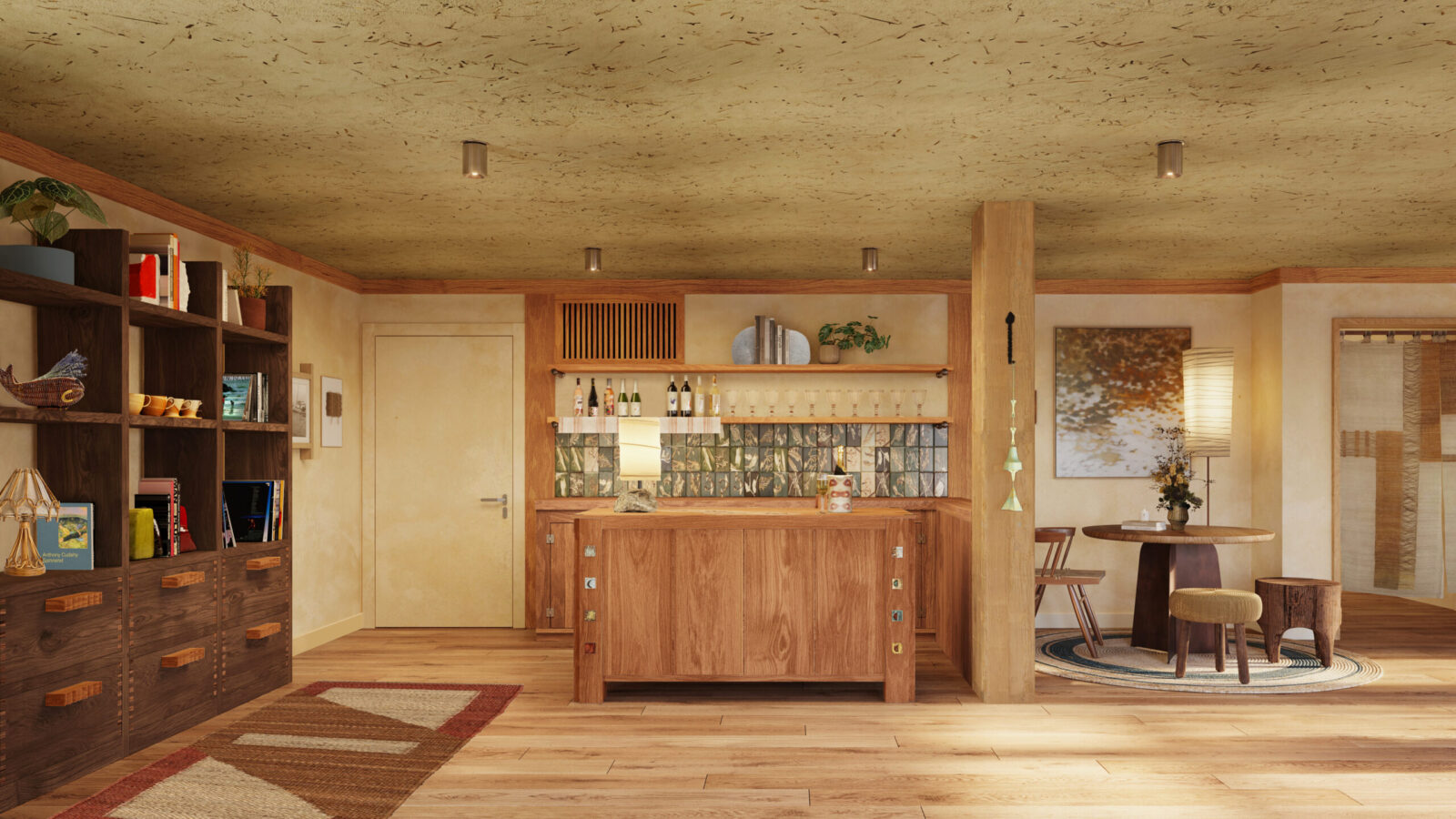
Greenport remains central—a place defined by its working waterfront, its bird-filled skies, and a rhythm that resists urgency. Mornings might call for a bike ride to the beach or a visit to a local vineyard. Afternoons are spent learning the craft of oyster cultivation or wandering through fields. Evenings settle into something slower—music drifting from local bars, conversations stretching late into the night.
There is something distinctly poetic about this landscape. Long a draw for writers like Walt Whitman, as well as artists and wanderers—not for spectacle, but for its quiet depth. Oyster Estate does not attempt to define that condition. It is less a destination than a continuation—something to return to, and to carry forward.
Oyster Estate begins within that feeling.
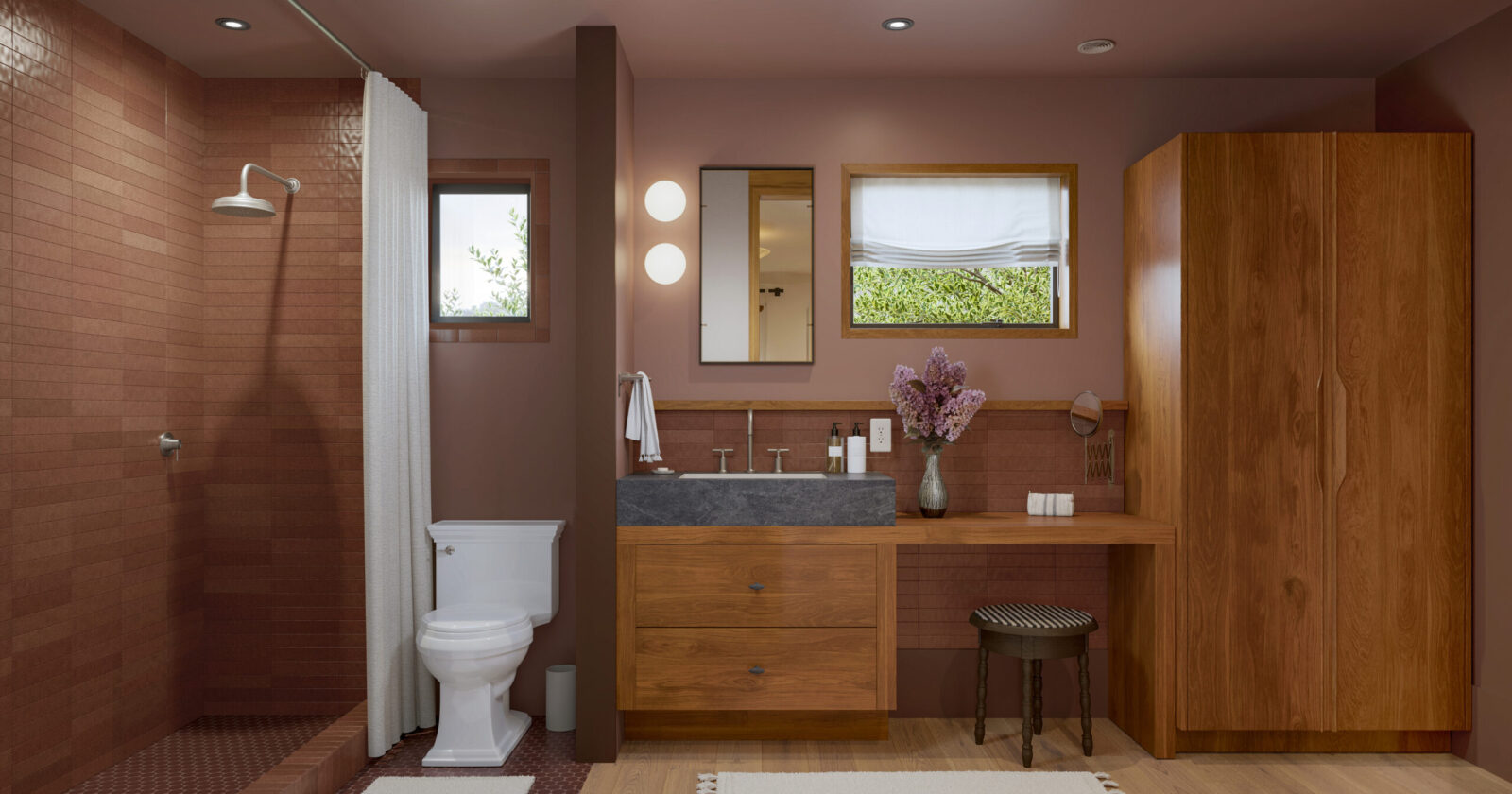
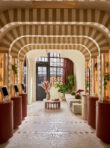
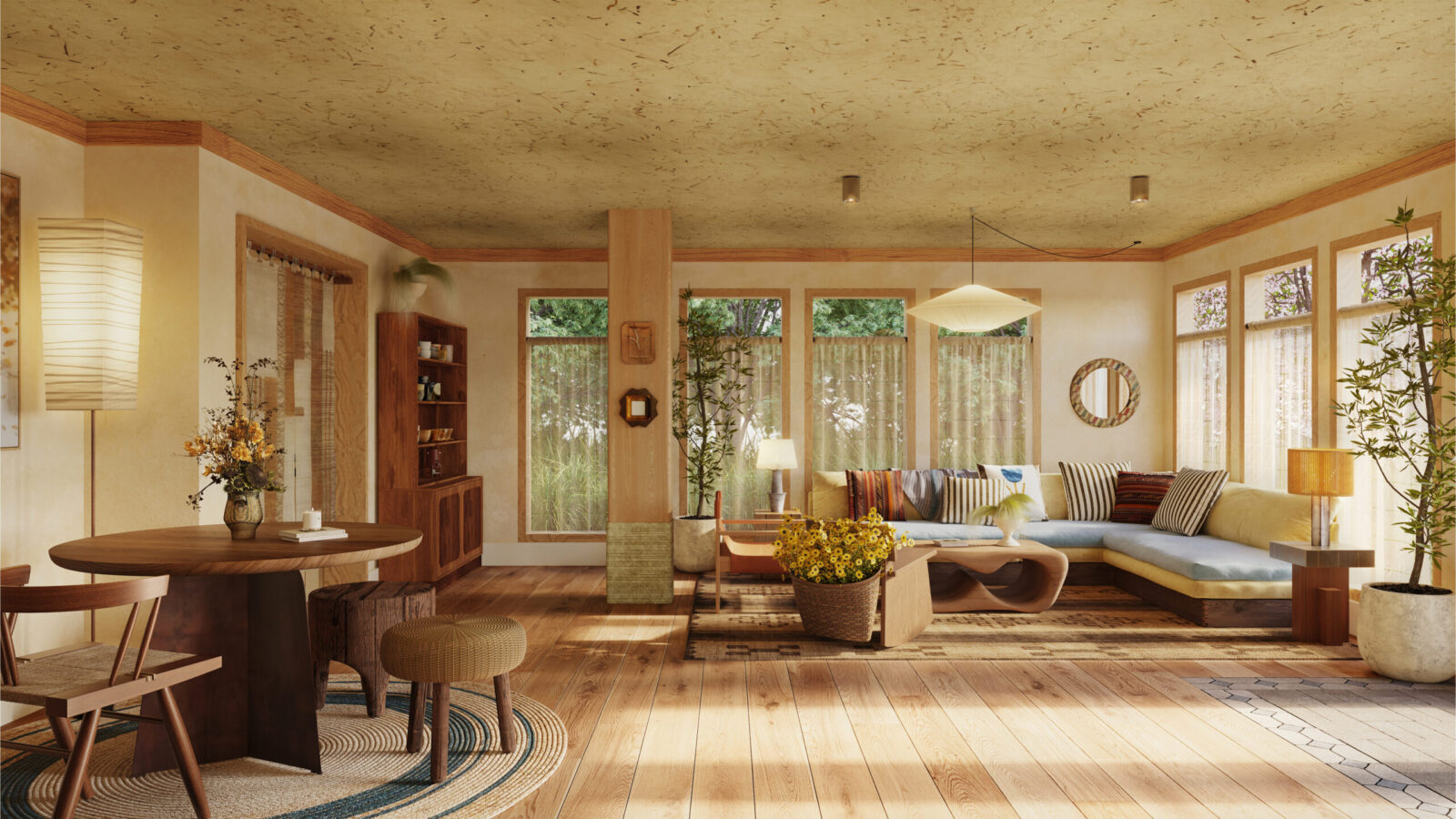
Throughout the hotel, the landscape is not referenced; it is embedded within this material language. Flowers gathered from around Greenport are dried and pressed into lobby tiles, forming a preserved tapestry of the town in clay. A hay plaster ceiling recalls the surrounding salt marshes, translating something environmental into something spatial. Ceramics from a maker just down the street sit alongside these gestures, rooting the project in its immediate community. Photography reflects the briny, untamed landscape as it exists—not elevated, but real. Local craft is not applied, but integrated into the architecture itself.
The common spaces unfold as a series of lived-in rooms rather than a singular gesture. Seating invites both gathering and solitude—long conversations or quiet observation. Books, objects, and plant life are placed with care but without hierarchy, contributing to a sense of life already in progress.
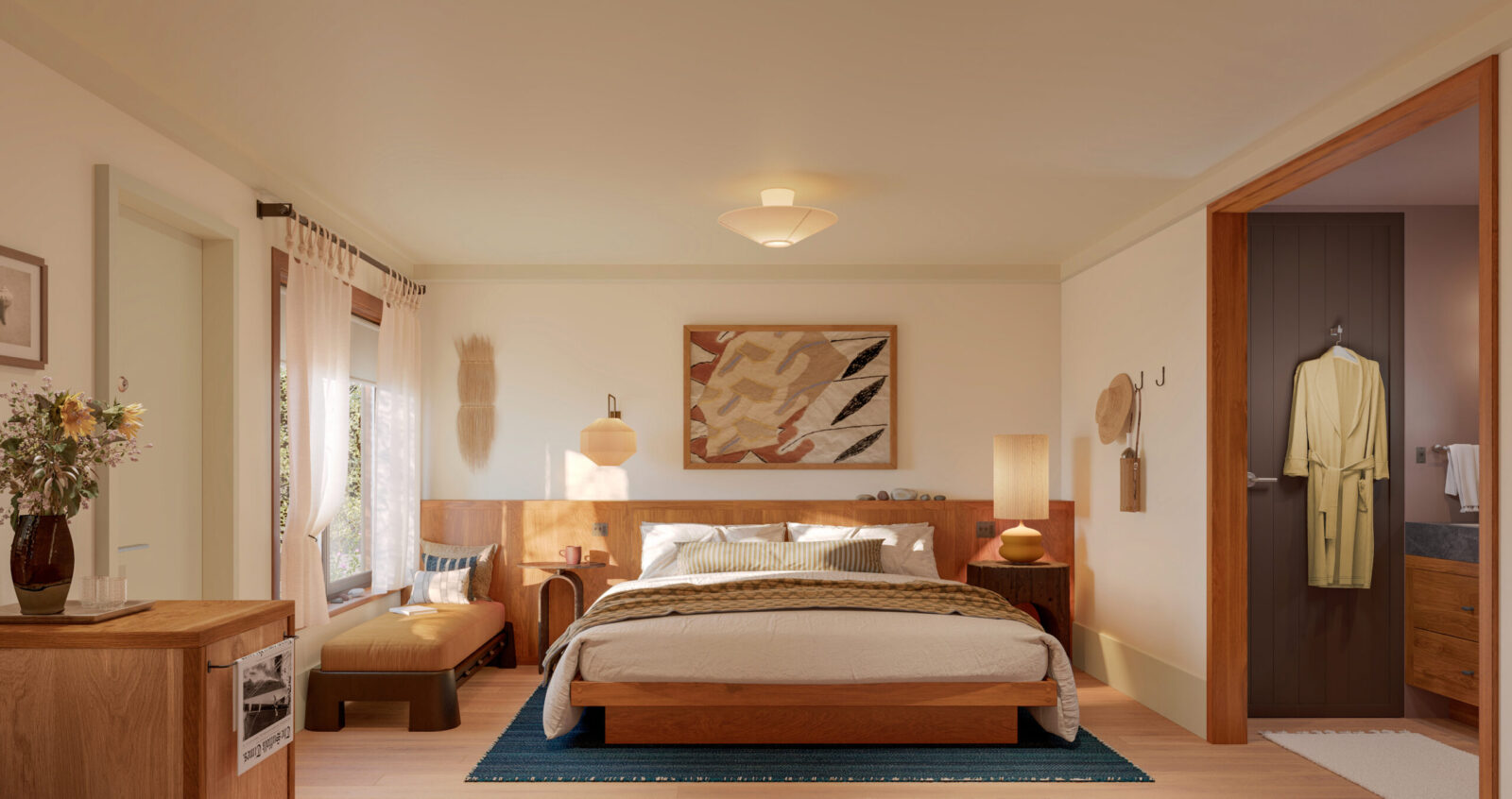
The guestrooms are conceived as intimate, grounded environments. Custom quilts inspired by local flora, stained glass that catches the shifting coastal light, and materials like corduroy reference both landscape and workwear. The palette is drawn directly from the shoreline—stones collected from nearby beaches, softened grays, clay tones, and weathered greens shaped by salt and sun.
Bathrooms are immersive and elemental, feeling less like separate rooms and more like an extension of the living environment. Clay tile wraps the walls in a continuous field of color—warm, tactile, and meant to age, to be used, to hold time.
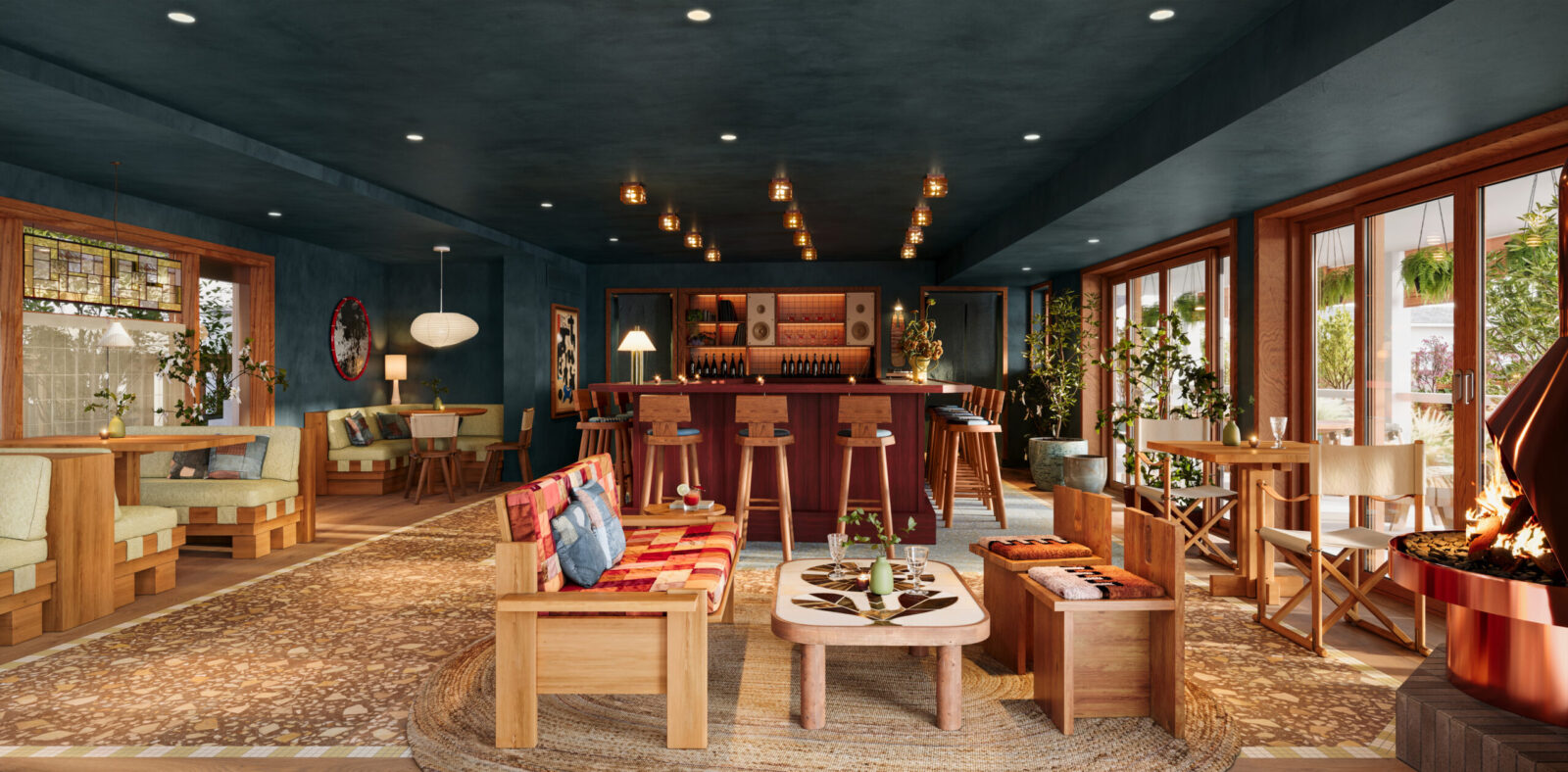
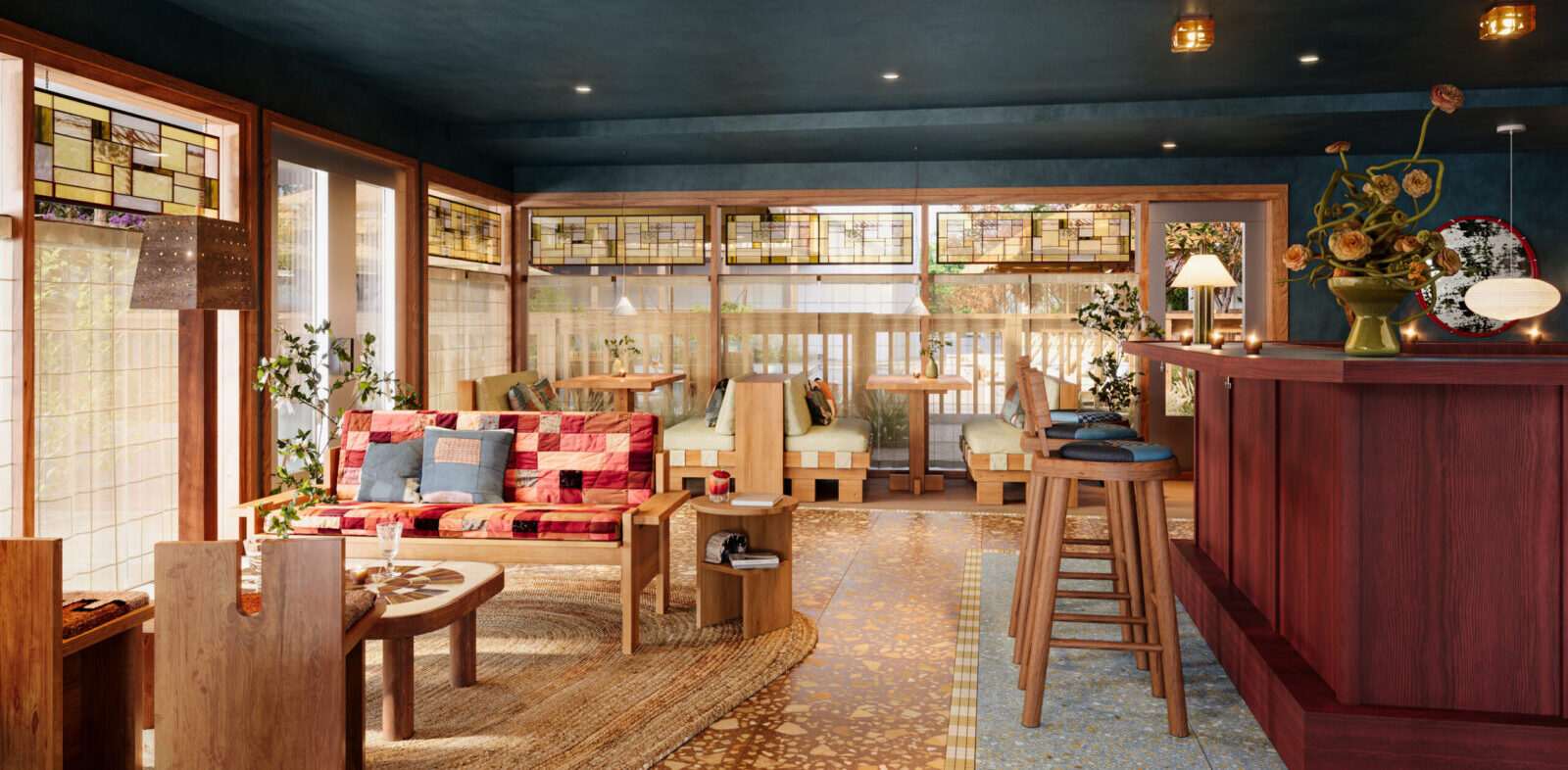
At the heart of the experience is Fortune Favors, the hotel’s restaurant, a more untamed counterpoint to Oyster Estate’s calm. Conceived as both an artist’s workshop and gathering space, it offers coastal dishes shaped by Asian influence within an atmosphere that deepens as day turns to night. The approach is intentional but unrestrained, leaning into excess, storytelling, and discovery.
As the light fades, the room shifts in tone and energy, becoming closer, richer, and more charged. What feels open elsewhere draws inward here. The palette moves into saturation, deep oceanic blues, burnt siennas, and warm amber tones. Light is low and deliberate, scattered like constellations across the ceiling, pulling the eye inward. Materiality becomes more expressive, wood darkens in contrast, upholstery shifts into patchwork and pattern, evoking handwork, old sails, and improvisation. Surfaces layer over one another, rugs over tile, textiles over structure, suggesting accumulation rather than completion.
The space operates as both workshop and stage, with the bar at its center as an active force rather than a backdrop. There is a constant sense of motion, of something unfolding in real time. This carries through to the menu, where coastal ingredients are interpreted through an Asian lens, shaped by movement, migration, and cultural overlap, fluid and open-ended.
The design is guided by luck and legend, with illustrated lore woven throughout. A system of imaginative symbols offers guests a language to inhabit rather than observe. This visual world takes form through talismans and omens that echo the spirit of the sea, its mythology of crossings, risk, and fortune.
Along the perimeter, the space softens into layered thresholds. Windows are filtered through stained glass, textiles, and plant life that move freely throughout, reinforcing something organic, slightly unruly. Tables gather in pockets, creating moments of intimacy within a larger field.
A subtle tension runs through the room, slightly off balance, alive with conversation and possibility. At its core, Fortune Favors draws from the sea not as a calm surface, but as a force defined by unpredictability, exchange, and risk. The name carries this belief forward, that something meaningful requires stepping into the unknown, inviting a sense of mischief and boldness.
Fortune favors the brave.